

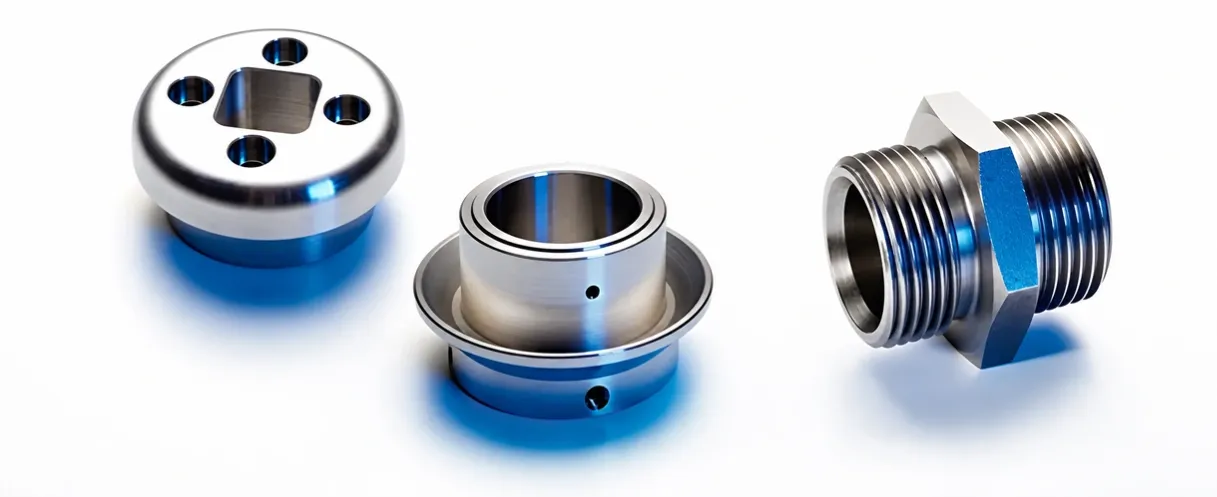
The grade 1.4828 (AISI 309) is an austenitic refractory stainless steel grade that is generally used for furnace inner coverage and other high temperature applications. It has improved oxidation resistance and it withstands high temperatures. A summary of its main applications: High temperature corrosion resistance, high temperature mechanical properties, good aptitude for hot and cold forming, good weldability, acceptable machinability, not magnetic. Some of the main application fields of this steel grade are furnace components, boilers, high temperature containers.
| AVRUPA | İTALYA | ALMANYA | FRANSA | İNGİLTERE | ABD | ||
|---|---|---|---|---|---|---|---|
| EN 10095: 1999 |
(UNI 6900:71) |
- | (NF A 35-578-91) | (BS 1501 pt. 3-80) | AISI | ||
| Grade | N° | Werkstoff | N° | ||||
| X15CrNiSi20-12 | 1.4828 | X16CrNi23-14 | X15CrNiSi20-12 | - | Z17CNS20-12 | 309S24 | AISI 309 |
Chemical composition of 1.4828 according to European Standard EN10095 is:
| C | Si | Mn | P | S | Cr | Ni | N | |
|---|---|---|---|---|---|---|---|---|
| Min | 1,50 | 19,00 | 11,00 | |||||
| Max | 0,20 | 2,50 | 2,00 | 0,045 | 0,015 | 21,00 | 13,00 | 0,11 |
According to European Standard EN 10095, these are the typical values of some physical properties for a steel 1.4828:
| Property | 20ºC | Up to 200ºC | Up to 400ºC | Up to 600ºC |
|---|---|---|---|---|
| Density (g/cm3) | 7,9 | |||
| Coef. Of thermal expansion (x10-6/ºC) | 16,5 | 17,5 | 18,0 | |
| Thermal Conductivity W/mºC | 15 | |||
| Specific Heat KJ (Kg K) | 0,5 | |||
| Electrical Resistivity mm2/m | 0,85 |
This quality has a general good corrosion resistance especially at high temperatures. Its corrosion resistance behaviour is better than 1.4301 steel grade.
Austenitic steels are generally susceptible to stress corrosion cracking. For applications requiring high stress corrosion cracking, Duplex steels such as 1.4362 and 1.4462 are more suitable.
The values of some mechanical properties at room temperature according to European standard EN10095 for an austenitic grade 1.4828 can be found in the following table:
| Hardness (HB) | Rp0,2% (MPa) | Rm (MPa) | A (%) |
|---|---|---|---|
| <223 | >230 | 550-750 | >30 |
This austenitic refractory stainless steel has good aptitude to be worked by any manufacturing process such as hot forming or cold forming and acceptable aptitude to machining. It is important to take into account that the mechanical properties of these steels can’t be changed by heat treatment. This only can be achieved with a cold forming process of the material.
This grade can be welded by any conventional method of welding as TIG, MIG, plasma, submerged arc.
The heat treatment for this steel is solution annealing treatment that consist in heating up to 1050-1150°C and fast cooling in air or water. This steel is also prone to embrittlement after exposure between 600 and 900°C.
The 1.4828 is acceptable for machining operations. However, adequate machining tools need to be used in order to minimise the work hardening effect and the amount of stringy chips.
Phone
(0216) 593 04 74
